How SplitRock Photography Grew 21X in Six Years

Written by
PhotoDay
September 14, 2026

Many successful business stories start the same way: in a garage with the work done by hand. For a growing photography studio, that “garage” is usually a living room floor buried in paper order forms, cash and checks in one pile, prints in another, and someone spending too much time trying to figure out who paid for what.

That’s exactly where Rocky Thompson of SplitRock Photography found himself six years ago as he took an unexpected pivot from senior photography to sports photography, growing from a side hustle in small-town Iowa to a four-person, full-time, high-volume photography studio in just six years.

SplitRock by the numbers:

  • Average order value up 57% since joining PhotoDay
  • Almost 50 PD300s
  • Almost 300 PD200s
  • Over 2,200 PD100s
  • Lifetime sales in the top 1% of studios on PhotoDay
  • Among the top 50 studios on PhotoDay by total orders

In a recent webinar with PhotoDay’s Emily Mogowsky, Rocky reflected on how he got here, what he learned along the way, and the people, tools, and advice that helped.

Saying the first “Yes”

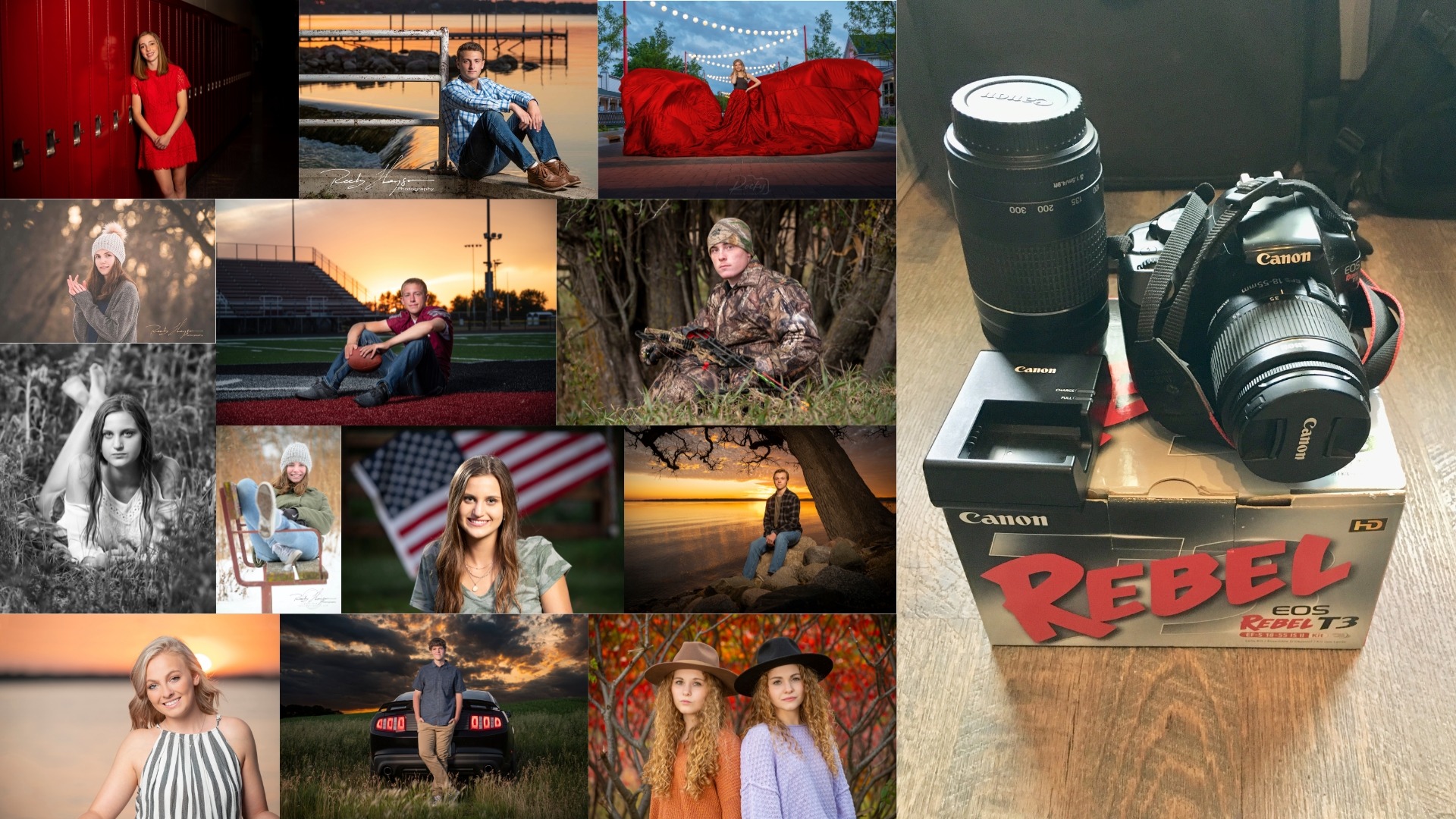
Six years ago, Rocky was a production manager at a company that made tournament archery supplies, and photography was something he did on the side. He started photographing senior student portraits on a Canon T3 and shared his images on social media for visibility. Volume photography, as Rocky knows it today, was never on the radar.
‍

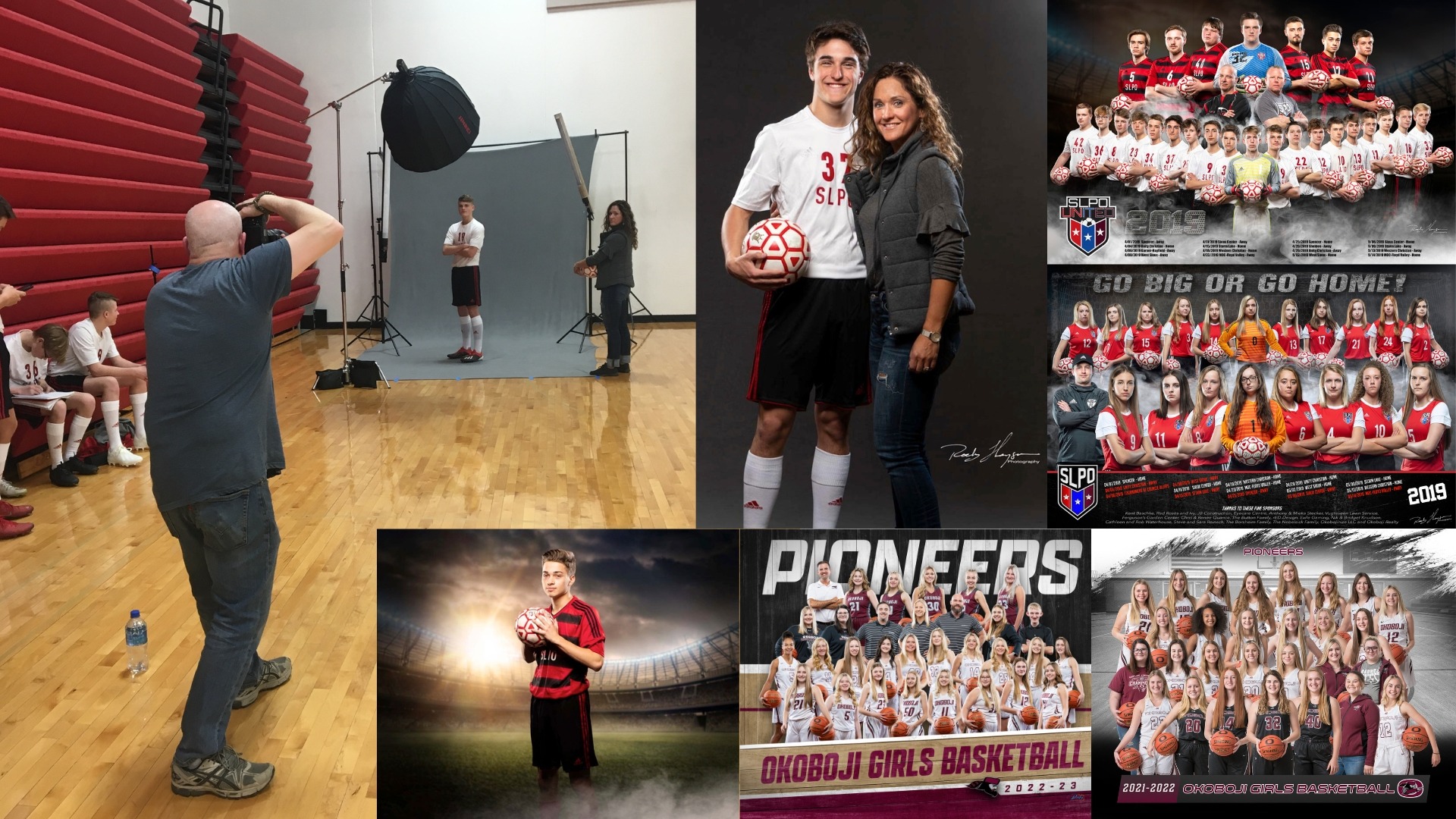
Then one day, the local athletic director, someone Rocky knew from high school, called. He was fed up with the big-box company that handled the school’s sports photos and asked Rocky to come photograph the basketball teams: roughly 40 girls and 40 boys on a tight timeline.

Rocky said yes that day. “That was the day that changed my life.”

He showed up with a simple, three-light setup based on what he knew from taking senior portraits, not knowing fully what came next. The shoot went well, he finished on time, the kids had fun, and it felt like the start of something bigger. Rocky didn’t have everything mapped out yet, but he knew the next step, and that’s all he needed.
‍

Summiting Paper Form Mountain

While the shoot went well, it quickly became clear that the paperwork was a pain. Every family brought a paper order form with cash or a check. Rocky took it all home to sort out. 

“I remember sitting in my living room with a pile of money and cash and checks over here, the order forms, the prints, trying to coordinate what went where.”

Roger’s wife, Angie, had been watching all of this from the couch with her laptop. Eventually, he admits to Emily, he turned and asked why she wasn’t helping. Angie just smiled and turned her screen toward him: PhotoDay’s sign-up form, already half filled out in his name. He hasn’t worked with paper forms since.

Know what matters, and prioritize it

Ask what you’re really selling 

Not long after the basketball team job, the principal from that same school called and asked Rocky to take over picture day for the entire school system (elementary, middle school, and high school students, plus staff). This was something completely new: around 1,650 people in four days, with just himself and one hired helper. 

He was scared, but said yes anyway. Then he fixated on backdrops, spending days researching options, convinced that choosing the right one would make or break the job. Finally, he posted in the PhotoDay Users Group asking for suggestions, then his phone rang. It was a (then) stranger named Jim Alsup, with a single question:

“Are you selling a picture of the background or are you selling a picture of the student?”

Rocky’s priorities were reset, and he shifted his focus to iron out lighting, workflow, and how he’d manage thousands of images afterward. Picture day came and went, and when the gallery opened, sales came in well beyond what he expected. Then a neighboring school saw the work, called, and Rocky signed them the next day. 

Choose what’s worth it, to you

While his photography business was gaining traction, Rocky was still working full time, and the combined workload was starting to take its toll. He recalls the day his boss, Al, called him into his office and told him, out of genuine concern for his health, that he couldn’t keep running himself into the ground juggling both jobs. It was time to choose one.

Rocky paused and thought about the version of himself five years down the road, if he didn’t take this chance, who would always wonder what might have happened, so he chose photography. His reasoning was simple: “If I don’t try, I’ll never know.”

Build a team that gels

As the studio grew, so did Rocky’s work days, and 14- to 16-hour stretches became the norm. He couldn’t keep scaling himself, so he started building a team. But rather than searching for the most polished photographers he could find, he looked for great people he could teach. His sister-in-law Amber came from managing a floral shop and now handles the booking and day-to-day operations, and Adam, a musician Rocky met while shooting concerts, quickly proved himself on big school jobs.

Rocky built his team around people he could trust with the human side of photography. Camera settings and workflows can be taught, but the ability to connect with people or put a nervous kid at ease can’t. When you pair the right personality with the right training, you get someone who’s the full package.

Dedicate time to the details 

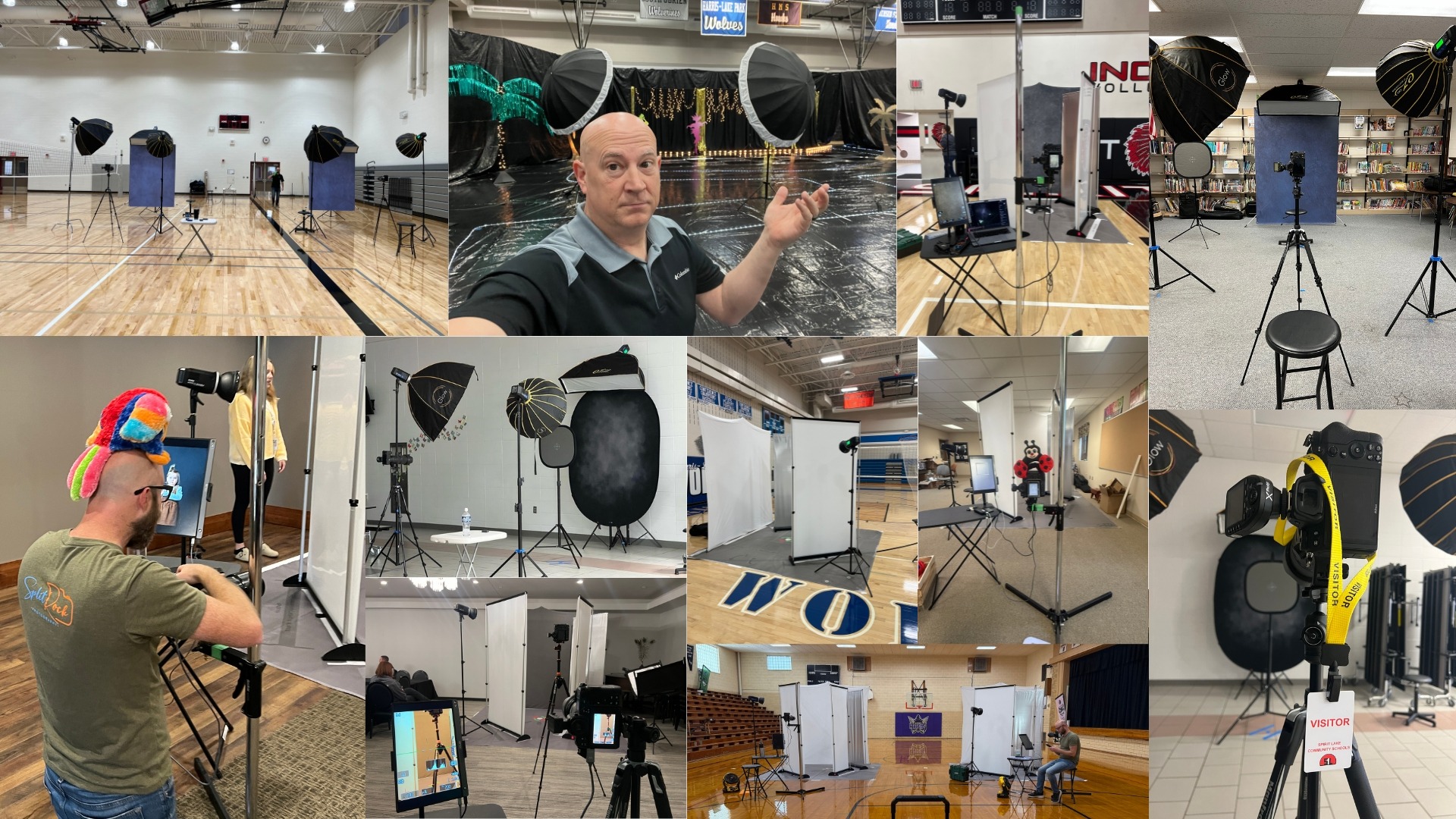
Rocky’s biggest advice for photographers getting into high-volume composites is to do the prep work early. This past summer, he and his team spent a full day in the studio testing every light and power setting and documenting the results. Now, SplitRock’s setup is identical at every school, with a printed vinyl runner marking where each light, camera, and backdrop goes. On a recent job, three stations were camera-ready in just 25 minutes. Composite templates get built over the summer too, so nothing is being figured out in the middle of the busy season.

That planning also lets the team set their own pace instead of letting schools dictate it. With an average of about 45 seconds per student, Amber can build every schedule with confidence. 

Invest in your setup

For Rocky, the value of equipment goes beyond the upfront cost. Tools that speed up setup, simplify a workflow, or cut down on editing time pay for themselves many times over in a high-volume business. It also means less stress on picture day, shorter hours for the team, and more energy left for the part of the job that matters most: connecting with the kids in front of the camera. His reasoning applies to almost any tool: “If it saves an hour, take that times 300 jobs.”
Make picture day easy, start to finish

A great image won’t do you much good if the rest of the experience falls short. Schools, parents, and students should feel like everything runs smoothly, from the first email to the final order. For SplitRock, that means same-day email replies, an organized check-in through the Capture app, and a schedule the studio controls. On picture day, the team helps kids pose and puts nervous ones at ease, so every student knows they’re in good hands. Afterward, high-quality images reach parents quickly through their PhotoDay gallery, which makes ordering convenient, and fulfillment simple. 

When kids walk away thinking “that wasn’t so bad,” and parents get photos they’re excited to order, schools notice. As Rocky put it, that’s “the stuff that gets you booked back.”

‍

The Short Version

SplitRock didn’t grow from a master plan. It grew from Rocky’s willingness to say yes to new opportunities, and lean on people who’d been there before to help him figure it out. Six years later, he’s still learning as he goes, but now newer photographers are starting to call him with the same questions he once asked. His advice for them: find people who genuinely want you to succeed — and when the chance comes, be that person for someone else.
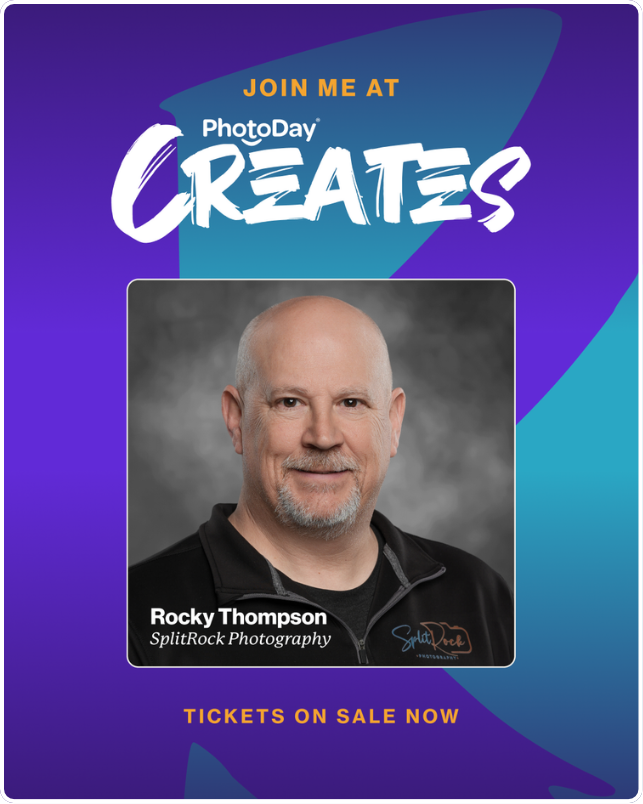
Rocky Thompson headshot for PhotoDay Creates promotion (with link to PhotoDay Creates webpage))

‍

‍

Watch the recorded webinar here and hear more about Rocky’s story in his own words at PhotoDay Creates, our annual conference taking place in Tampa, December 6–8, 2026. Seats are limited! 

See the schedule and get your ticket at photoday.com/creates

‍

‍

‍

‍

‍

‍

Ready to build a studio with the tools and community that helped Rocky grow? Request a demo to connect with the PhotoDay team. Want to jump right in? Create a free account to get started.

‍

BLOG & ARTICLES

Related Posts

Trailblazers
September 14, 2026

How SplitRock Photography Grew 21X in Six Years

Trailblazers
August 1, 2026

How Angelo McComis Stays Stress-Free On Picture Day

Trailblazers
August 13, 2021

TRAILBLAZER: ZEKE MORENO

Try PhotoDay today with no strings attached.

No cost to get started.

How SplitRock Photography Grew 21X in Six Years

Written by
PhotoDay
September 14, 2026

Many successful business stories start the same way: in a garage with the work done by hand. For a growing photography studio, that “garage” is usually a living room floor buried in paper order forms, cash and checks in one pile, prints in another, and someone spending too much time trying to figure out who paid for what.

That’s exactly where Rocky Thompson of SplitRock Photography found himself six years ago as he took an unexpected pivot from senior photography to sports photography, growing from a side hustle in small-town Iowa to a four-person, full-time, high-volume photography studio in just six years.

SplitRock by the numbers:

  • Average order value up 57% since joining PhotoDay
  • Almost 50 PD300s
  • Almost 300 PD200s
  • Over 2,200 PD100s
  • Lifetime sales in the top 1% of studios on PhotoDay
  • Among the top 50 studios on PhotoDay by total orders

In a recent webinar with PhotoDay’s Emily Mogowsky, Rocky reflected on how he got here, what he learned along the way, and the people, tools, and advice that helped.

Saying the first “Yes”

Six years ago, Rocky was a production manager at a company that made tournament archery supplies, and photography was something he did on the side. He started photographing senior student portraits on a Canon T3 and shared his images on social media for visibility. Volume photography, as Rocky knows it today, was never on the radar.

‍

Then one day, the local athletic director, someone Rocky knew from high school, called. He was fed up with the big-box company that handled the school’s sports photos and asked Rocky to come photograph the basketball teams: roughly 40 girls and 40 boys on a tight timeline.

Rocky said yes that day. “That was the day that changed my life.”

He showed up with a simple, three-light setup based on what he knew from taking senior portraits, not knowing fully what came next. The shoot went well, he finished on time, the kids had fun, and it felt like the start of something bigger. Rocky didn’t have everything mapped out yet, but he knew the next step, and that’s all he needed.

‍

Summiting Paper Form Mountain

While the shoot went well, it quickly became clear that the paperwork was a pain. Every family brought a paper order form with cash or a check. Rocky took it all home to sort out. 

“I remember sitting in my living room with a pile of money and cash and checks over here, the order forms, the prints, trying to coordinate what went where.”

Roger’s wife, Angie, had been watching all of this from the couch with her laptop. Eventually, he admits to Emily, he turned and asked why she wasn’t helping. Angie just smiled and turned her screen toward him: PhotoDay’s sign-up form, already half filled out in his name. He hasn’t worked with paper forms since.

Know what matters, and prioritize it

Ask what you’re really selling 

Not long after the basketball team job, the principal from that same school called and asked Rocky to take over picture day for the entire school system (elementary, middle school, and high school students, plus staff). This was something completely new: around 1,650 people in four days, with just himself and one hired helper. 

He was scared, but said yes anyway. Then he fixated on backdrops, spending days researching options, convinced that choosing the right one would make or break the job. Finally, he posted in the PhotoDay Users Group asking for suggestions, then his phone rang. It was a (then) stranger named Jim Alsup, with a single question:

“Are you selling a picture of the background or are you selling a picture of the student?”

Rocky’s priorities were reset, and he shifted his focus to iron out lighting, workflow, and how he’d manage thousands of images afterward. Picture day came and went, and when the gallery opened, sales came in well beyond what he expected. Then a neighboring school saw the work, called, and Rocky signed them the next day. 

Choose what’s worth it, to you

While his photography business was gaining traction, Rocky was still working full time, and the combined workload was starting to take its toll. He recalls the day his boss, Al, called him into his office and told him, out of genuine concern for his health, that he couldn’t keep running himself into the ground juggling both jobs. It was time to choose one.

Rocky paused and thought about the version of himself five years down the road, if he didn’t take this chance, who would always wonder what might have happened, so he chose photography. His reasoning was simple: “If I don’t try, I’ll never know.”

Build a team that gels

As the studio grew, so did Rocky’s work days, and 14- to 16-hour stretches became the norm. He couldn’t keep scaling himself, so he started building a team. But rather than searching for the most polished photographers he could find, he looked for great people he could teach. His sister-in-law Amber came from managing a floral shop and now handles the booking and day-to-day operations, and Adam, a musician Rocky met while shooting concerts, quickly proved himself on big school jobs.

Rocky built his team around people he could trust with the human side of photography. Camera settings and workflows can be taught, but the ability to connect with people or put a nervous kid at ease can’t. When you pair the right personality with the right training, you get someone who’s the full package.

Dedicate time to the details 

Rocky’s biggest advice for photographers getting into high-volume composites is to do the prep work early. This past summer, he and his team spent a full day in the studio testing every light and power setting and documenting the results. Now, SplitRock’s setup is identical at every school, with a printed vinyl runner marking where each light, camera, and backdrop goes. On a recent job, three stations were camera-ready in just 25 minutes. Composite templates get built over the summer too, so nothing is being figured out in the middle of the busy season.

That planning also lets the team set their own pace instead of letting schools dictate it. With an average of about 45 seconds per student, Amber can build every schedule with confidence. 

Invest in your setup

For Rocky, the value of equipment goes beyond the upfront cost. Tools that speed up setup, simplify a workflow, or cut down on editing time pay for themselves many times over in a high-volume business. It also means less stress on picture day, shorter hours for the team, and more energy left for the part of the job that matters most: connecting with the kids in front of the camera. His reasoning applies to almost any tool: “If it saves an hour, take that times 300 jobs.”

Make picture day easy, start to finish

A great image won’t do you much good if the rest of the experience falls short. Schools, parents, and students should feel like everything runs smoothly, from the first email to the final order. For SplitRock, that means same-day email replies, an organized check-in through the Capture app, and a schedule the studio controls. On picture day, the team helps kids pose and puts nervous ones at ease, so every student knows they’re in good hands. Afterward, high-quality images reach parents quickly through their PhotoDay gallery, which makes ordering convenient, and fulfillment simple. 

When kids walk away thinking “that wasn’t so bad,” and parents get photos they’re excited to order, schools notice. As Rocky put it, that’s “the stuff that gets you booked back.”

‍

The Short Version

SplitRock didn’t grow from a master plan. It grew from Rocky’s willingness to say yes to new opportunities, and lean on people who’d been there before to help him figure it out. Six years later, he’s still learning as he goes, but now newer photographers are starting to call him with the same questions he once asked. His advice for them: find people who genuinely want you to succeed — and when the chance comes, be that person for someone else.

Rocky Thompson headshot for PhotoDay Creates promotion (with link to PhotoDay Creates webpage))

‍

‍

Watch the recorded webinar here and hear more about Rocky’s story in his own words at PhotoDay Creates, our annual conference taking place in Tampa, December 6–8, 2026. Seats are limited! 

See the schedule and get your ticket at photoday.com/creates

‍

‍

‍

‍

‍

‍

Ready to build a studio with the tools and community that helped Rocky grow? Request a demo to connect with the PhotoDay team. Want to jump right in? Create a free account to get started.

‍

Share
Try PhotoDay today with no strings attached.

No cost to get started.

Sign up to get the party started!