





This year, one topic has risen above all others in the volume photography industry: security. Across peer communities and increasingly among the families we serve, the protection of images, intellectual property, and access rights is top of mind. As digital sharing expands, so does the responsibility to safeguard what matters most.
At PhotoDay, security is foundational to our platform, and we have always been at the cutting edge of image and data protection. You can read our recent Statement on Image Security here.
Online selling offers a world of opportunities, such as breaking sales records and enjoying more free time, but one of its pain points is the risk of image theft. Constantly evolving AI watermark removers have only exacerbated the issue.
In this blog, our CEO, Alex Kovacevic, explores the increasing issue of digital image theft through screenshots, AI watermark removers, and lack of customer awareness.
Alex also covers what PhotoDay is doing to protect your photos through newly released features and many more on the way.
Intellectual Property and Copyright Protection
Data and image protection are not the only security threats that photographers face.
I have heard significant concern from photographers across the industry regarding the proliferation of customers stealing images posted online and illegally using AI to remove watermarks or reassemble images.
The rapid advancements in AI represent a fundamental paradigm shift in the capability of technology, and with that come unique opportunities and unique risks to established business models. When used ethically, AI has the potential to enhance our industry, create advancements in productivity, and enable us to serve the needs and desires of our customers at an even higher level. When used unethically, AI can be used to steal the incredible images that are the livelihood of everyone who practices photography as a profession.
The unfortunate reality is that AI is already so powerful that with the right amount of effort, it will be able to rebuild any photo published—even with every available countermeasure deployed.
Here are some one and done prompts that has Gemini Nano Banana defeat popular watermark or blur solutions:
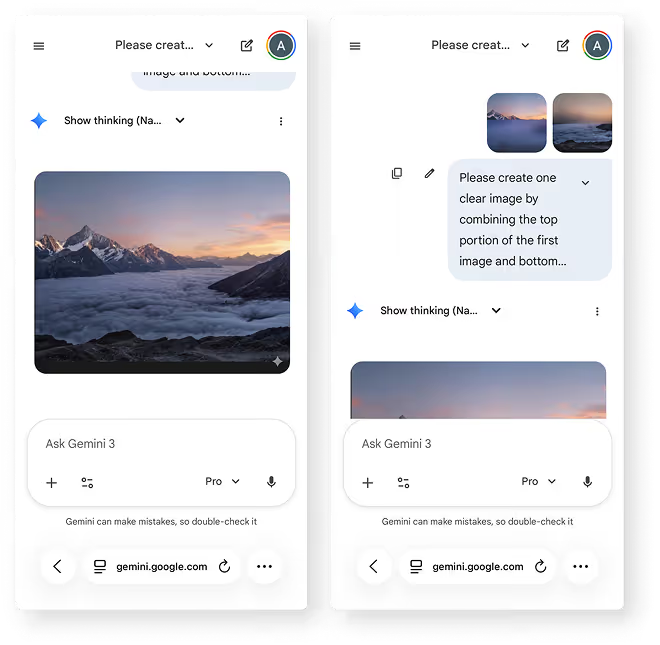
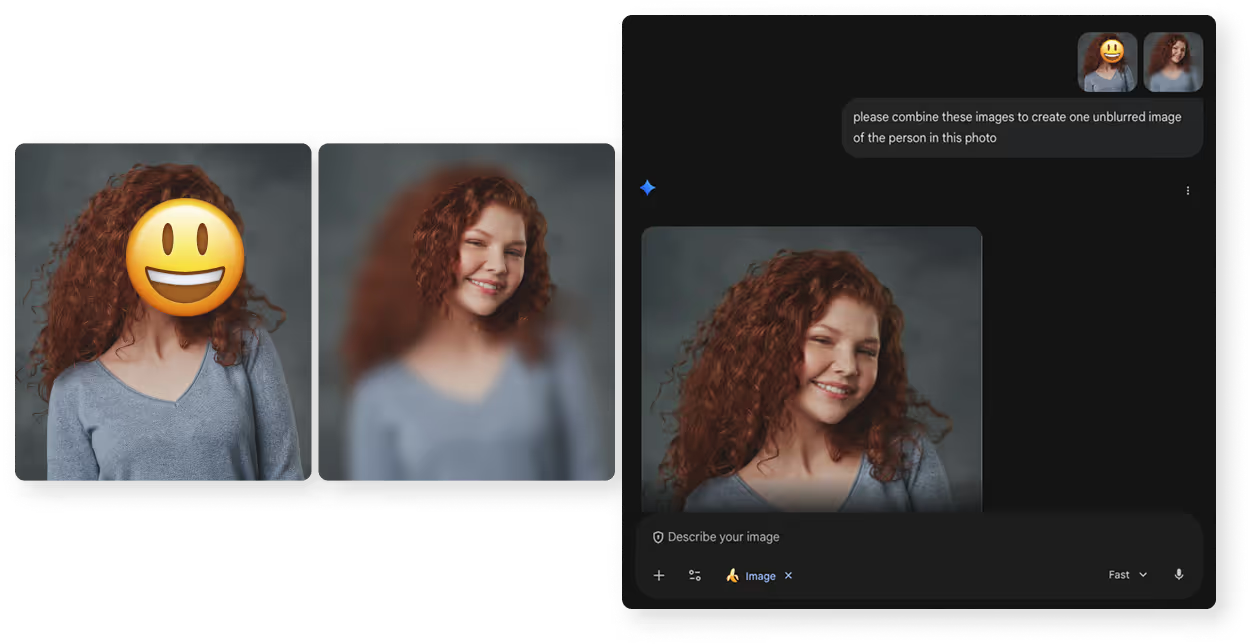
Even traditional screenshot blockers are no match for AI when pictures of screens are taken on another device:
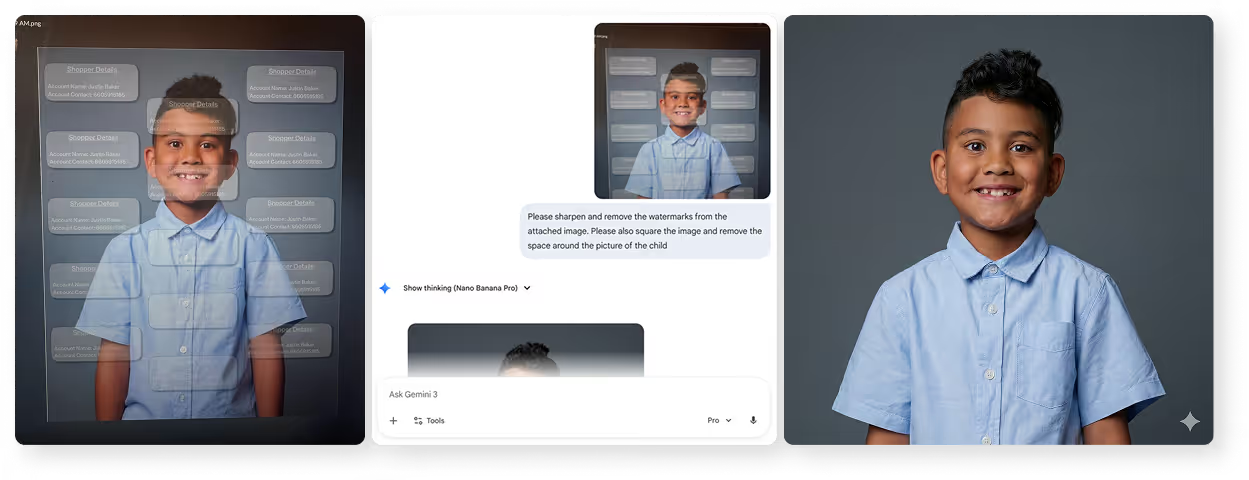
AI can even literally rebuild the most distorted image with nothing more than a reference picture:
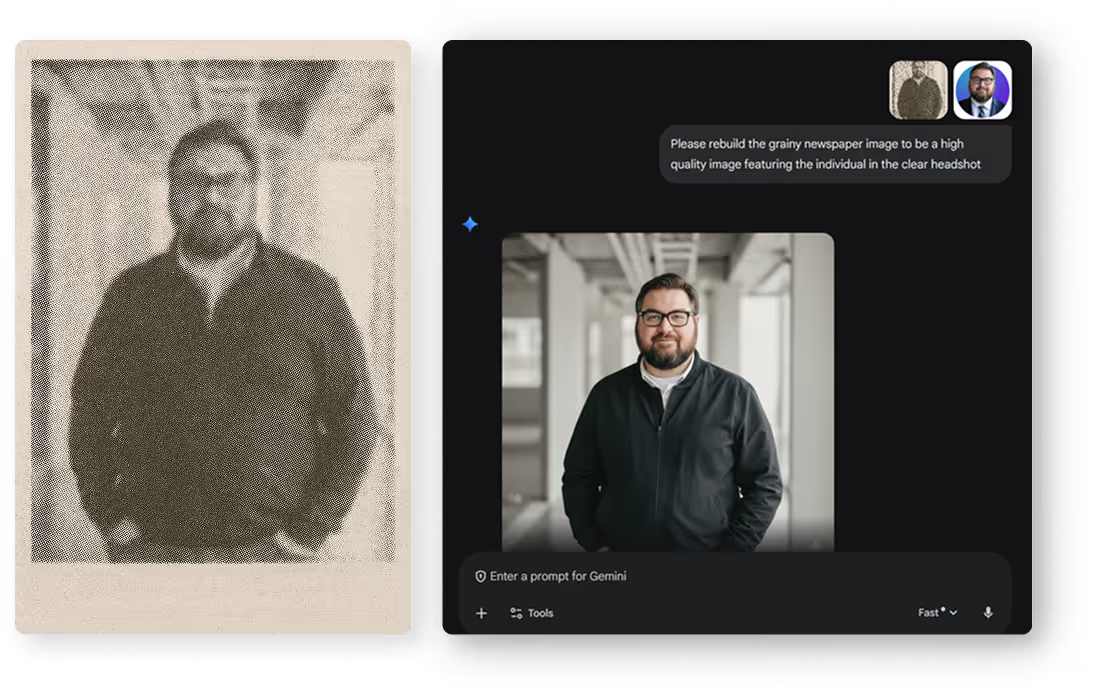
It is disheartening to see people share tips on social media helping others break the law and commit copyright theft. We are encouraging PhotoDay users to document instances of this and share them with us, and we are exploring ways to support customers who pursue enforcement of their IP rights.
How We’re Combating Image Theft
While different platforms approach image protection in different ways, no technological solution can guarantee 100% prevention of unauthorized copying. At PhotoDay, we promise to be transparent and upfront about how our image protection measures function as we continue to research and develop solutions.
We see the fight against this being fought on 3 separate fronts:
- Technological.
No current technological solution in the market can guarantee 100% prevention of AI-driven image reconstruction. We can, however, make it harder. In the coming weeks, we will be releasing a number of technological countermeasures, some of which are already released in their first stage:- Where possible, we will deploy DRM (digital rights management) screenshot blockers (which produce a black screen when a screenshot is taken) as an additional layer of protection against mobile screenshots.
- With our new Auto Blur feature, when certain commonly used keystroke combinations for capturing screenshots on desktop devices are detected, the entire gallery of photos is automatically blurred. Auto Blur is enabled by default for all jobs in PhotoDay, making integration seamless for studios. Mobile device protections are in development. Learn more below.
- We created an Info Overlay feature that displays the customer’s information on each photo in the gallery experience to deter them from sharing screenshots. This feature is off by default, but can be enabled for every job in PhotoDay. It works on both mobile and desktop devices. Learn more below.
- We improved our default watermark design to create greater friction for AI watermark removers.
- Commercial.
Commercial countermeasures discourage customers from stealing photos and provide a base level of compensation for the photographer in the event that they do.- We believe there is no better tool for this than PhotoDay’s AdvancePay. With AdvancePay (essentially selling a pre-pay credit the consumer redeems when they place their main order), you get the benefit of capturing cash and commitment from the customer up-front, as you would with traditional pre-pay, but you then also get the higher Average Order Value from proofing images customers love and want to buy more of.
- We will be releasing a workflow very shortly that enables photographers to publish galleries that require an AdvancePay purchase for customers to access.
- Publicity.
While no company can prevent all misuse and infringement entirely, a concentrated publicity campaign could be effective in changing behavior. Most law-abiding people do not want to think of themselves as criminals, and many do not believe what they are doing is a crime. We can change that:- In egregious cases of intentional infringement, visible enforcement may play an important role in reinforcing respect for IP rights.
- We have also seen success with watermarks that explicitly call out watermark removal and illegal copyright theft as a crime that will be reported if caught—as well as language that affirms copyright theft is not a “victimless crime,” and that it directly harms hard-working local photographers in their community.
We will continue working hard to create friction and barriers for image theft, and to create commercial workflows that reduce both the ability and incentive to steal images. However, we will always be transparent about the trade-offs and limitations of any technological solution, and be honest with our partners that there is no solution here that 100% safeguards copyright IP if you are looking to maximize Revenue/Subject by previewing images.
Protecting digital images is a constant battle against both technological advancements and bad actors, which requires ongoing vigilance, testing, and a total commitment to staying up to date with emerging threats. At PhotoDay, there is nothing we take more seriously.
— Alex Kovacevic
CEO, PhotoDay
PhotoDay’s New Image Protection Measures
On 2/26/26, we released Info Overlay and Auto Blur, the first two tools in our new Image Protection panel.
Info Overlay displays the customer’s information on each photo in the gallery experience to deter them from sharing screenshots.
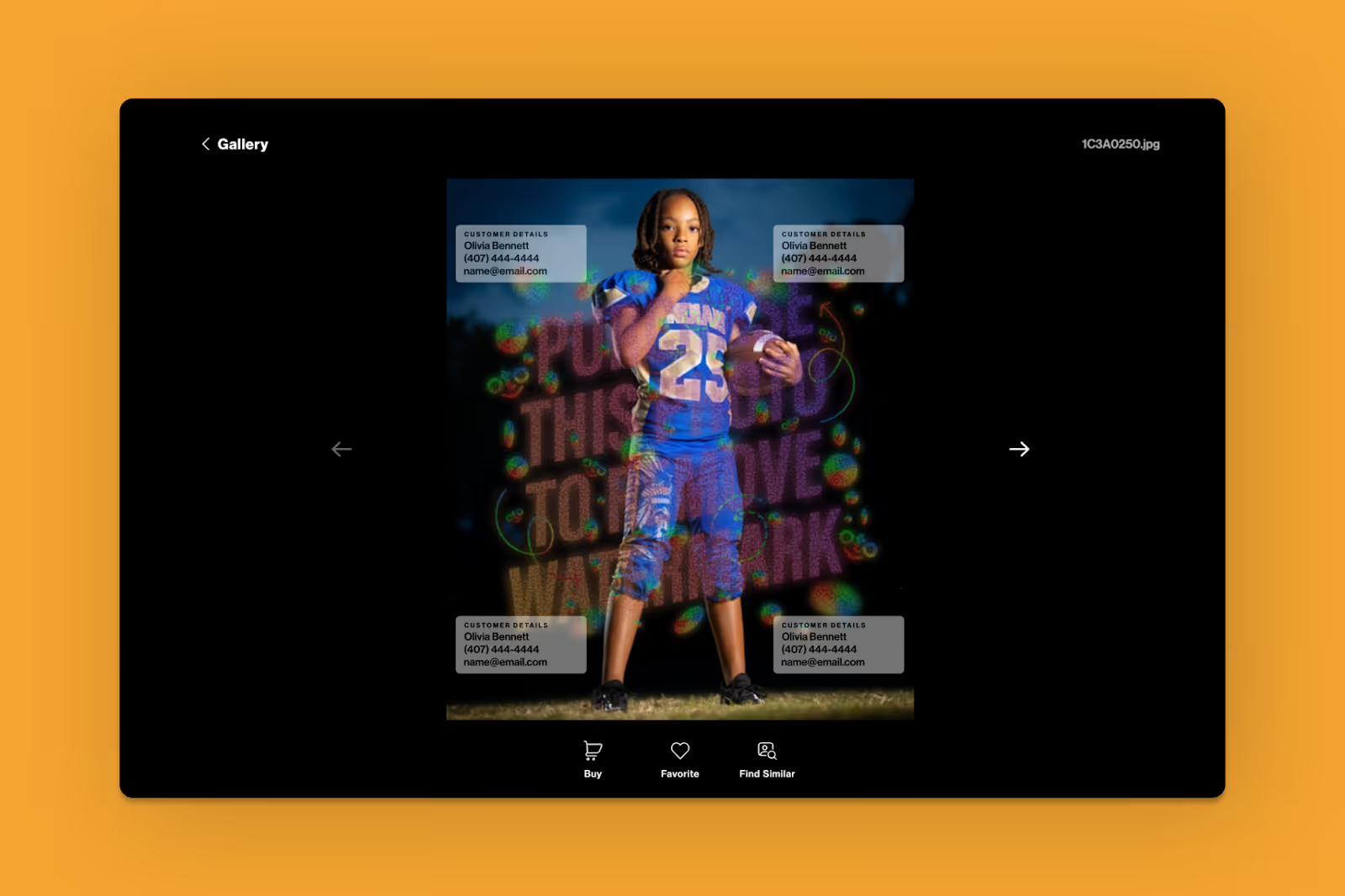
Here’s how it works: We populate the customer's account information they use to log in (e.g., shopper name and email or phone), and overlay it on top of the existing rendered watermark.
The intent is to create accountability and deter customers from taking and sharing screenshots on social media platforms, since their information would be visible.
Info Overlay works on both mobile and desktop devices. It is off by default, but you can toggle it on and off for each job. If you’d like a hand enabling it for your jobs, just reach our to our customer success team!
When a customer is using a desktop computer, Auto Blur will blur the entire gallery if the browser loses focus, or when screenshot-related key combinations are detected—all while preserving a clear customer experience during normal browsing.
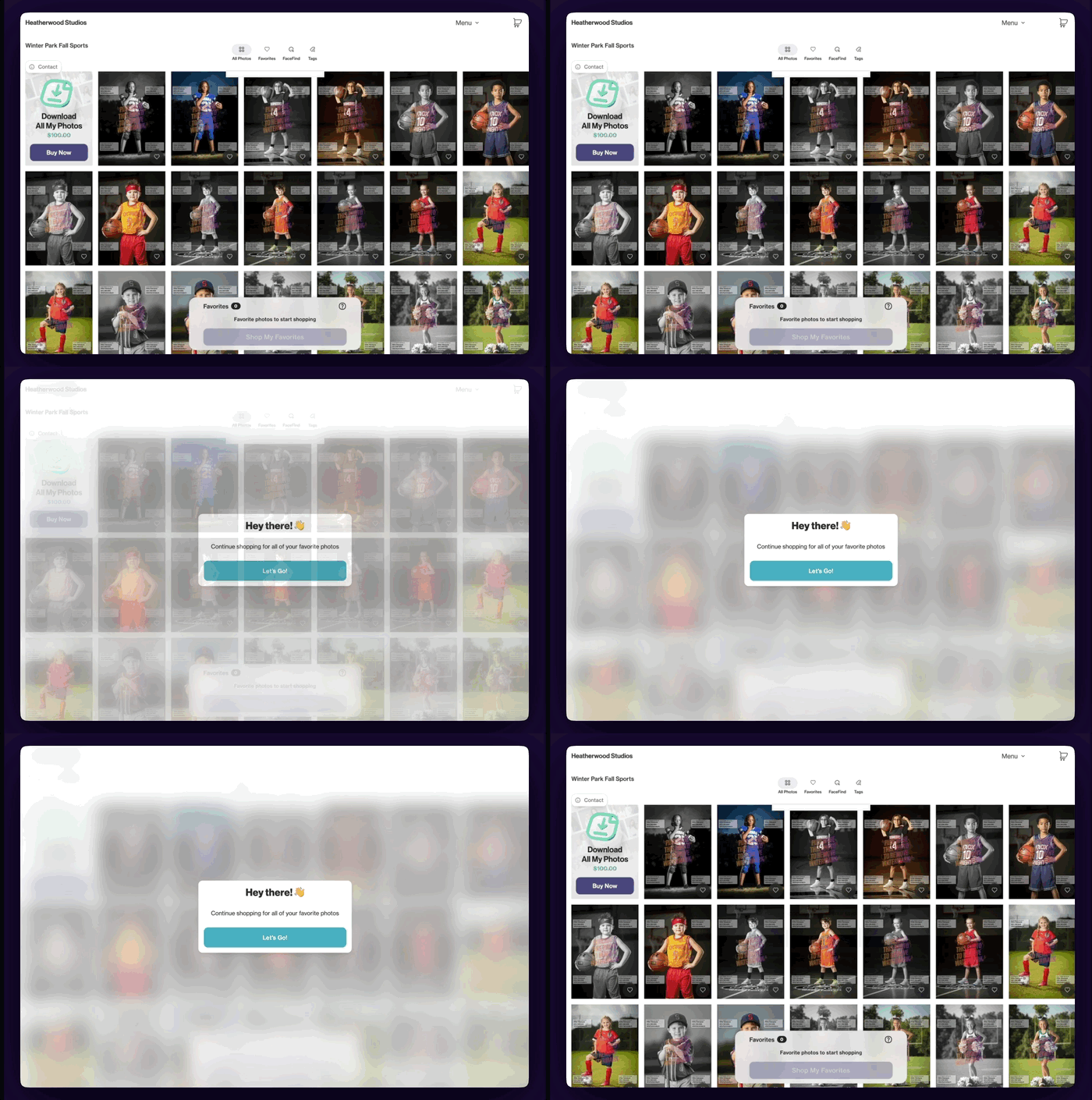
Auto Blur is already live in all PhotoDay galleries. No integrations. No hassle. This feature is desktop-only for now, but more mobile protections are coming very soon.
Stronger Protections. More Control.
As customer behavior and AI technology evolve, it’s important to layer protection efforts rather than rely on a singular approach.
This feature release addresses some of the main obstacles with protecting images:
- Customer-identity based protections are more effective than visual deterrents alone
- Multiple layers reduce misuse and misunderstanding
- Striking a balance between maintaining a professional gallery presentation and protecting photos
- Building protection directly into the experience
And we’re not done! We are committed to continuing to develop and release tools that offer you more control over your studio and your photos.


